


The Best Skincare Routine for Your Skin Type
By Dr Ceylan Yilmaz, Cosmetic Doctor & Medicinal Chemist
Part 2 of 3 in the Methodical guide to building a skincare routine: tailoring it to your skin.
This follows on from How to Build a Skincare Routine That Actually Works →
Here’s how to tailor the Methodical Method to your specific skin.
Skincare Routine for Oily Skin
Your priorities are oil control, barrier support, hydration without heaviness, and pore care. The most common mistake I see in oily-skinned patients is over-cleansing, which strips the barrier and actually triggers the skin to produce more oil. Oily skin still needs hydration; the goal is to balance it, not to scrub it dry.
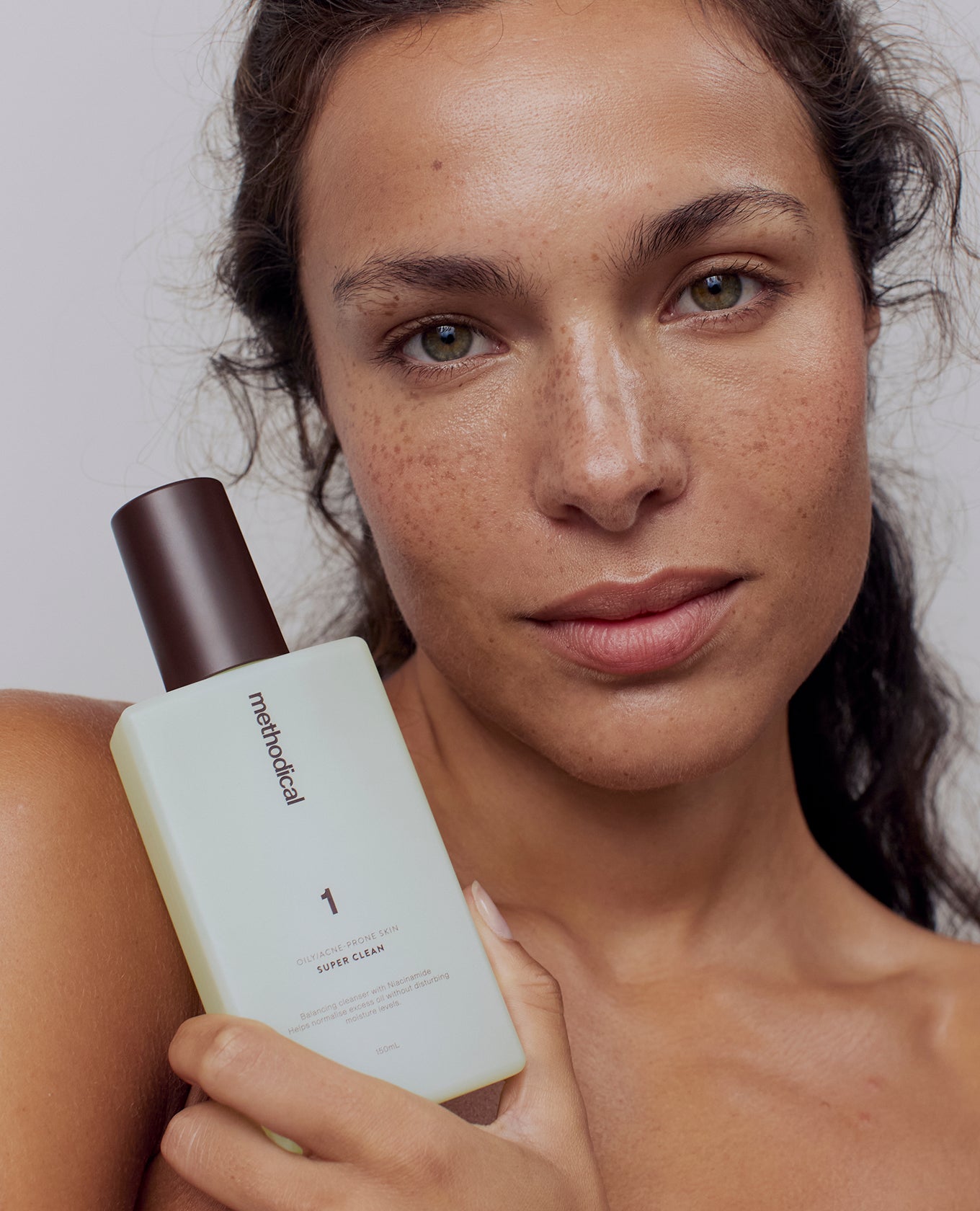
Cleanse: Super Clean, morning and night. A lightweight gel cleanser for oily skin that lifts excess oil, sweat and daily build-up without stripping the barrier or leaving the skin tight. Used twice daily, it keeps shine in check while protecting the skin’s natural moisture.
Exfoliate: Super Clear (2% salicylic acid), two to three mornings a week to start. A leave-on BHA exfoliant for oily and congested skin; because salicylic acid is oil-soluble, it works inside the pore to clear the build-up behind blackheads and congestion, while the supporting barrier ingredients keep the skin calm.
Vitamins both AM & PM: Super Firm (Vitamin C, coming soon), then Super Repair (Niacinamide). Niacinamide is one of the most-studied ingredients for oily skin, helping to balance oil and refine the look of enlarged pores, while Vitamin C brightens and defends against daily environmental stress.
Vitamin A (PM): Super Essential (Vitamin A, coming soon), introduced gradually at night, two to three evenings a week to start. Slowly increasing to nightly use. Vitamin A supports cell turnover and helps keep pores clear, which makes it a key evening active for oily, congestion-prone skin.
Moisturise: Super Supportive, applied lightly. A barrier moisturiser that hydrates oily skin without heaviness or shine; a thin layer is all you need, but never skip it, as dehydrated skin overproduces oil to compensate.
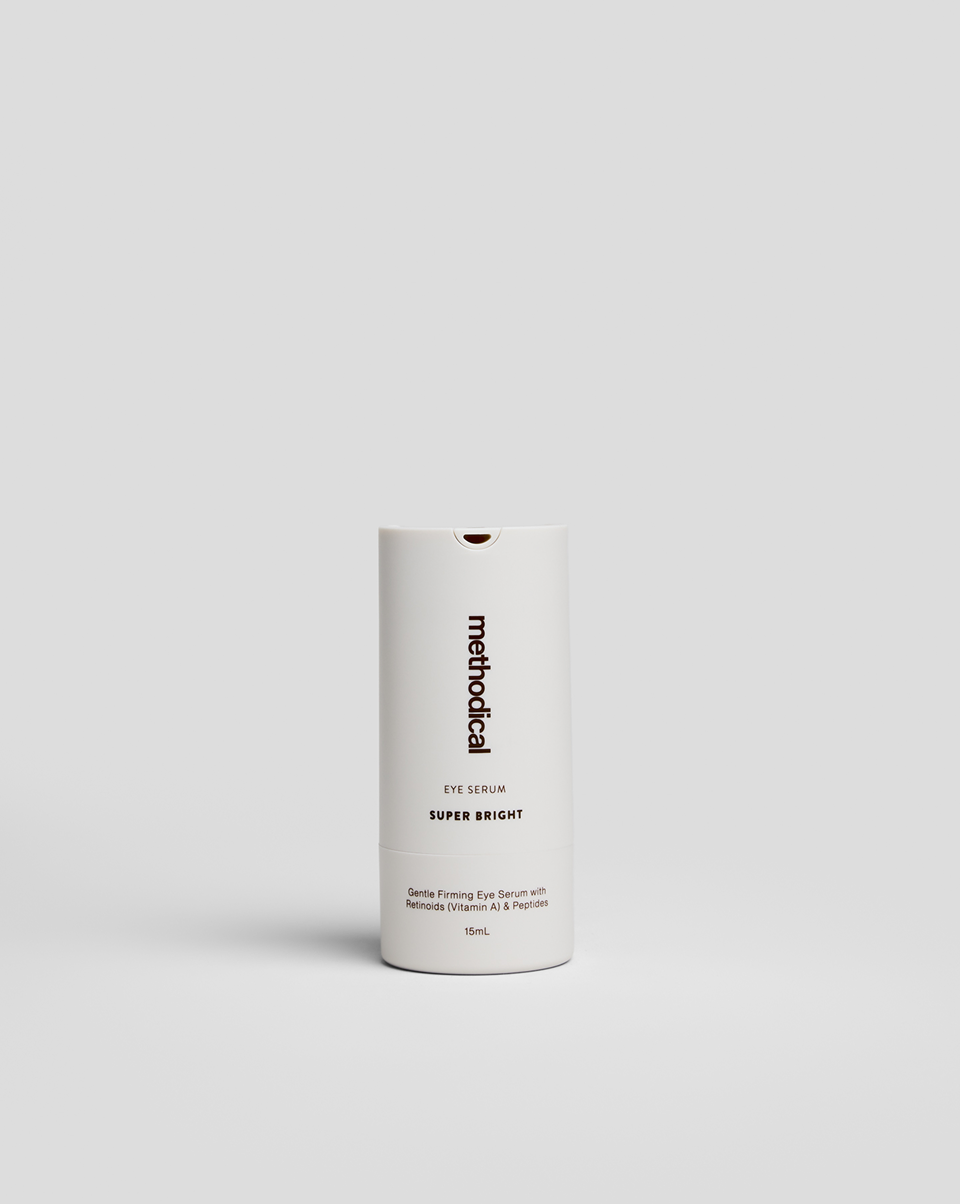
Eyes: Super Bright Eye Serum in the evening, patted gently around the eye area to hydrate and brighten the delicate skin where tiredness shows first.
SPF: A non-comedogenic, lightweight broad-spectrum SPF every morning, the single most important step for preventing premature ageing and pigmentation on oily skin.
Skincare Routine for Combination Skin
Combination skin is the most common type I see: an oilier T-zone across the forehead, nose and chin, with normal-to-drier cheeks. The principle is to treat the zones differently rather than treating the whole face as one. Manage oil and congestion through the centre, support and hydrate around the edges.
Cleanse: Super Clean, morning and night. It clears oil and build-up from the T-zone without over-stripping; if your cheeks feel tight afterwards, shorten the contact time there.
Exfoliate: Super Smooth (6% glycolic acid), two to three mornings a week – increasing to daily use. A leave-on AHA exfoliant that smooths and brightens combination skin; work it across the whole face with a little extra attention on the T-zone where congestion sits, and keep it lighter on the drier cheeks.
Vitamins both AM & PM: Super Firm (Vitamin C, coming soon), then Super Repair (Niacinamide). Niacinamide balances oil through the T-zone while supporting the barrier on the cheeks, and Vitamin C brightens and helps even overall tone.
Vitamin A (PM): Super Essential (Vitamin A, coming soon), introduced gradually at night, two to three evenings a week - while slowly increasing to nightly use. It supports cell turnover across the whole face, without the photosensitivity of a daytime active.
Moisturise: Super Supportive. Apply a little more generously on the cheeks and more sparingly across the T-zone, so each area gets the hydration it needs.
Eyes: Super Bright Eye Serum in the evening, to hydrate and brighten the delicate skin around the eyes.
SPF: A non-comedogenic, lightweight broad-spectrum SPF every morning to protect against UV-driven ageing and pigmentation.
Skincare Routine for Dry Skin
Dry skin needs more lipids and more occlusion. Keep cleansing very gentle and short, and layer hydration generously.
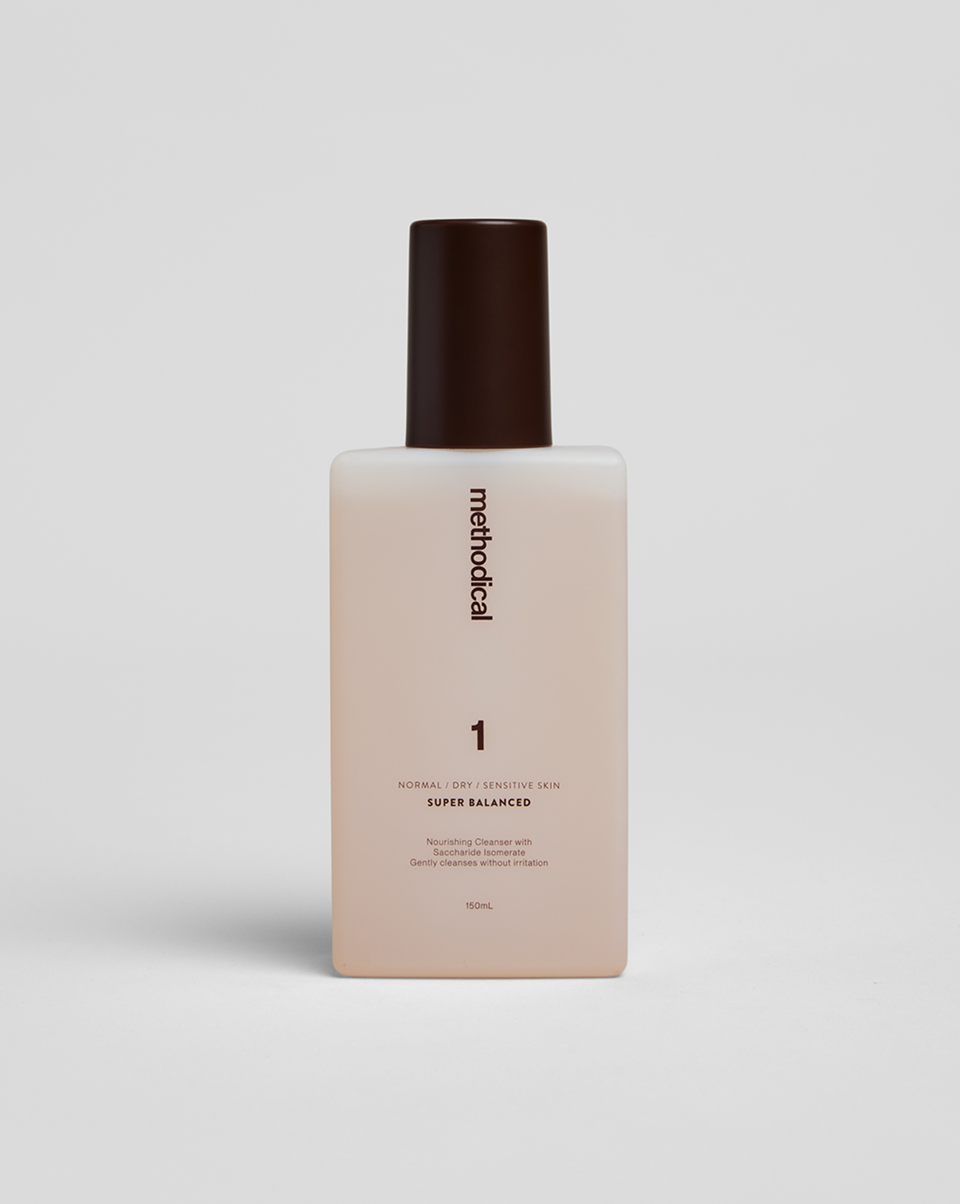
Cleanse: Super Balanced Cleanser, morning and night. Massage lightly onto damp skin in circular motions, then rinse with lukewarm water. A gentle, non-stripping cleanser that cleans without disturbing an already-dry barrier.
Exfoliate: Super Soft (10% lactic acid), two to three mornings a week slowly increasing to daily use. A leave-on AHA exfoliant ideal for dry skin; lactic acid is the gentlest of the AHAs and doubles as a humectant, so it smooths and resurfaces while drawing water into the skin rather than stripping it.
Vitamins both AM & PM: Super Firm (Vitamin C, coming soon) for antioxidant protection and brightness, then Super Repair (Niacinamide, a form of Vitamin B3) for barrier support and even tone. Together these multi-action serums hydrate, brighten and strengthen dry skin.
Vitamin A (PM): Super Essential (Vitamin A, PM only, coming soon), introduced gradually at night, two to three evenings a week to start – while slowly increasing to nightly use. Vitamin A supports cell turnover and smooths texture; pair it with generous moisturiser, as the bakuchiol in the formula helps offset the dryness retinoids can otherwise cause.
Moisturise: Super Supportive Moisturiser, applied generously while skin is still damp to seal everything in. Rich in ceramides and lipids to help rebuild a dry, depleted barrier.
SPF: A moisturising broad-spectrum SPF every morning to protect dry skin from UV damage and further moisture loss.
Skincare Routine for Sensitive Skin
The principle here is less, but better. Avoid fragrance if you’ve reacted in the past, avoid harsh actives, and introduce new products one at a time, two weeks apart.
Cleanse: Super Balanced Cleanser, morning and night. Fragrance-free and surfactant-mild, formulated to cleanse sensitive, reactive skin gently without triggering tightness, stinging or redness.
Exfoliate: Super Soft (10% lactic acid), starting two to three times a week and building slowly as your skin tolerates it. The gentlest exfoliant in the range, formulated with soothing actives to counter irritation; patch test first, and pause during any flare.
Vitamins both AM & PM: Super Repair, with niacinamide and panthenol to calm, hydrate and repair a compromised barrier, the priority for sensitive skin.
Moisturise: Super Supportive Moisturiser. Ceramides are particularly important here to reinforce a fragile barrier and lock in hydration.
SPF: A mineral (zinc oxide) sunscreen, which sensitive skin tends to tolerate best.
Skincare Routine for Mature and Ageing Skin
The single most effective anti-ageing intervention is daily sunscreen. After that, you want barrier support, hydration, and gentle actives that stimulate cell turnover and collagen.
Cleanse: Super Balanced Cleanser, morning and night. A gentle cleanser that removes the day without stripping mature skin, which is naturally drier and more delicate.
Exfoliate: Super Smooth (6% glycolic acid), two to three mornings a week – increasing to daily use. Glycolic is the smallest AHA molecule, so it penetrates deepest and is well-suited to stimulating the cell turnover that slows in mature skin; build up gradually, and always follow with SPF.
Vitamins AM & PM use: Super Firm (Vitamin C, coming soon) for antioxidant protection and brightness, then Super Repair (Niacinamide, a form of Vitamin B3) for barrier support and even tone. These multi-action actives work hard for ageing skin, targeting dullness, uneven tone and the early signs of ageing.
Moisturise: Super Supportive Moisturiser, applied generously, with a richer layer at night when skin does most of its repair.
SPF: Daily, non-negotiable. A broad-spectrum SPF 50 is the single most effective anti-ageing step there is.
Skincare Routine for Hyperpigmentation
Prevention does more work than treatment here. Inflammation drives pigmentation, so harsh routines that irritate the skin will make pigmentation worse, not better. Sunscreen is the most important step in this routine.
Cleanse: Super Balanced Cleanser, morning and night. A gentle, non-irritating cleanser, which matters here because inflammation is what drives pigmentation in the first place.
Vitamins both AM & PM: Super Firm (Vitamin C, coming soon) for antioxidant protection and brightness. Super Repair. Niacinamide has good evidence for evening out skin tone and softening the look of dark marks over time.
Moisturise: Super Supportive Moisturiser, to keep the barrier strong, since a compromised barrier inflames easily and can worsen pigmentation.
SPF: Daily broad-spectrum SPF 50, reapplied. This is the single highest-impact thing you can do for pigmentation, as UV exposure is its biggest driver.
Dr Ceylan Yilmaz is a cosmetic doctor and medicinal chemist based in Melbourne. This article is general information, not a substitute for personalised medical advice. If you have a persistent skin concern, see your GP or dermatologist.